



“I grow in coco” tells you the medium – not how that medium was made. Two bags can both say “100% coco” and still behave completely differently in your grow room. The difference is in what happened to the coir before it ever reached you: how it was graded, washed and buffered. This guide explains what to look for in a coco grow medium, how Kaya Coir is made, and which Kaya product is right for your grow.
Don’t just choose a medium – know your medium
Coco coir is made from coconut husk, and its quality depends on the raw material and the processing. These five things decide how a coco medium will perform for you:
| What to check | Why it matters | Kaya Coir |
|---|---|---|
| Structure | How open or compact the medium is. It controls drainage, aeration and how fast roots can spread. | A coarse, open blend with a healthy balance of air and water. |
| Particle size | The mix of fine particles and larger chunks changes how much air and water the medium holds. Too many fines and it stays wet and airless. | The finest particles are removed for a cleaner, more consistent structure. |
| pH | The starting pH affects which nutrients your plants can take up from day one. | pH 6.0 – 6.5, the ideal range for hydroponic growing. |
| EC | EC measures leftover salts. Poorly washed coco carries salts that throw off your feed and can burn young roots. | Multiple washed to remove salts – very low EC. |
| Buffering | Raw coco locks up calcium and magnesium. Buffering with calcium fixes this before you plant, so your plants are not left short. | Calcium buffered during preparation – ready to use, no pre-treatment. |
The real variable is consistency. If your medium changes from bag to bag, you are chasing a moving target with your feed. A consistent substrate gives you a predictable starting point every run.
How Kaya Coir is made
Kaya’s process is built around controlling the medium before it reaches the grower:
- Raw material – high-quality coconut husk is processed into coco.
- Particle selection – the finest particles are removed to give a cleaner, more consistent structure.
- Washing – the coir is washed repeatedly to reduce excess salts (EC).
- Calcium buffering – calcium is added during preparation to stabilise the medium.
- Consistent media – the result is clean, well-structured coco that gives you a reliable starting point.
Kaya Coir is RHP certified – an independent European quality mark for growing media that checks the coco is clean, consistent and suitable for professional horticulture.
The Kaya Coir range at a glance
| Product | Mix | Format | Prep needed | Sizes | Best for |
|---|---|---|---|---|---|
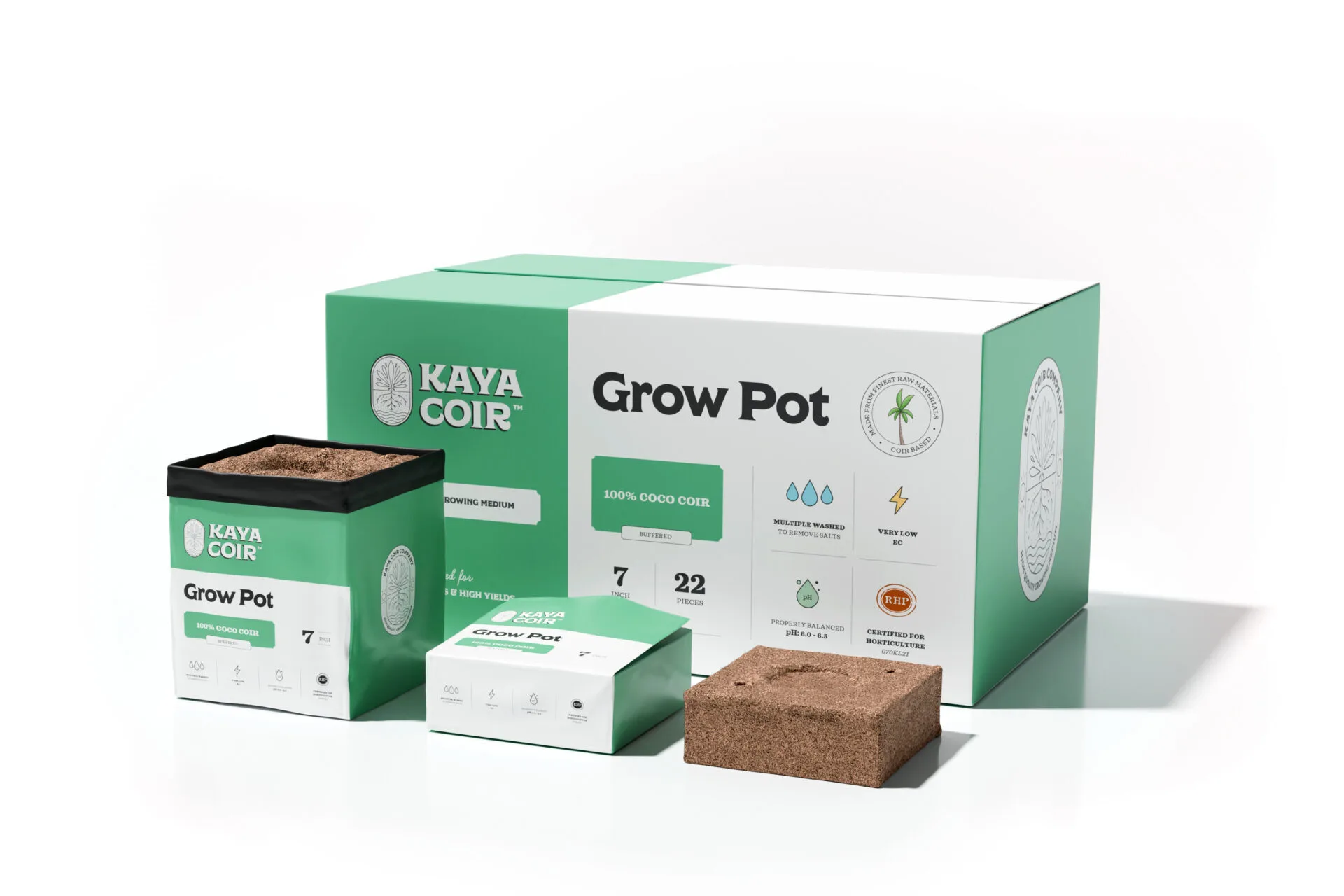
| Compressed Grow Pot | 100% coco | Dry block in its own grow bag | Add water – expands in minutes | 5.5″, 7″, 10″ | Easy, mess-free growing and saving storage space |
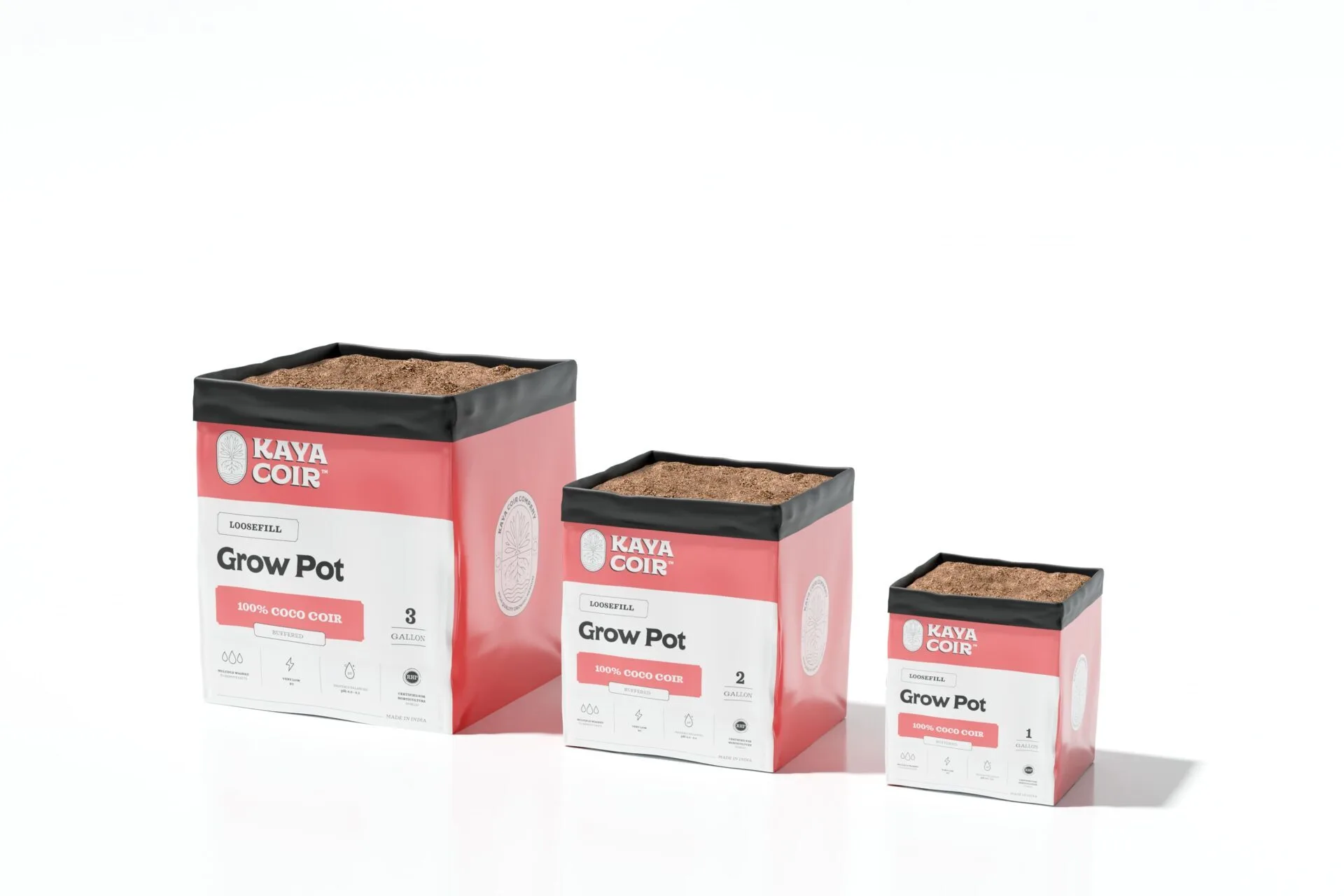
| LooseFill Grow Pot – 100% Coco | 100% coco | Grow bag pre-filled with loose coco | None – open, plant, water | 2, 3, 5 gallon | Hand watering and growers who like a moisture-holding mix |
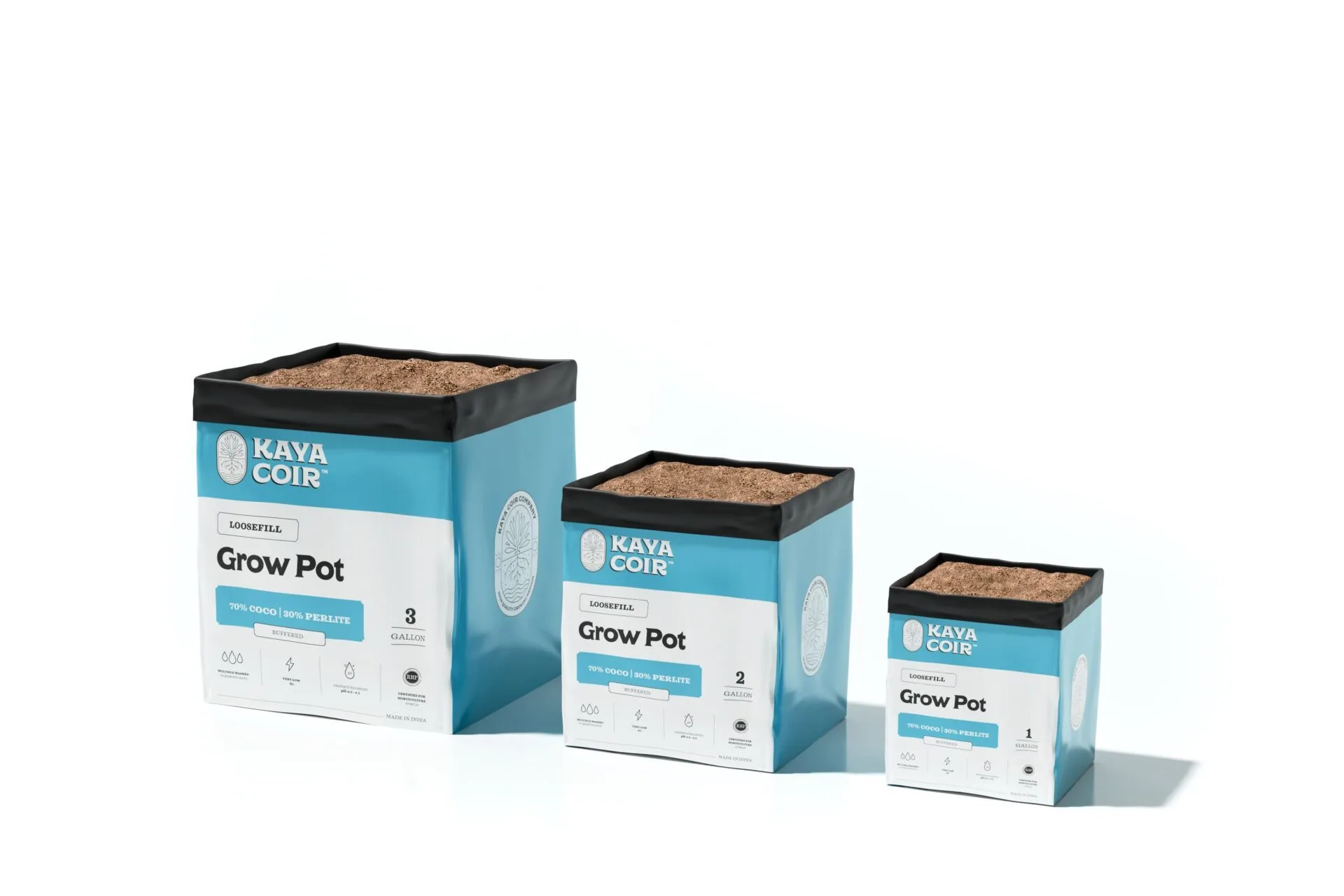
| LooseFill Grow Pot – 70/30 | 70% coco + 30% perlite | Grow bag pre-filled with loose mix | None – open, plant, water | 2, 3, 5 gallon | Frequent feeding, drip systems and heavy feeders |
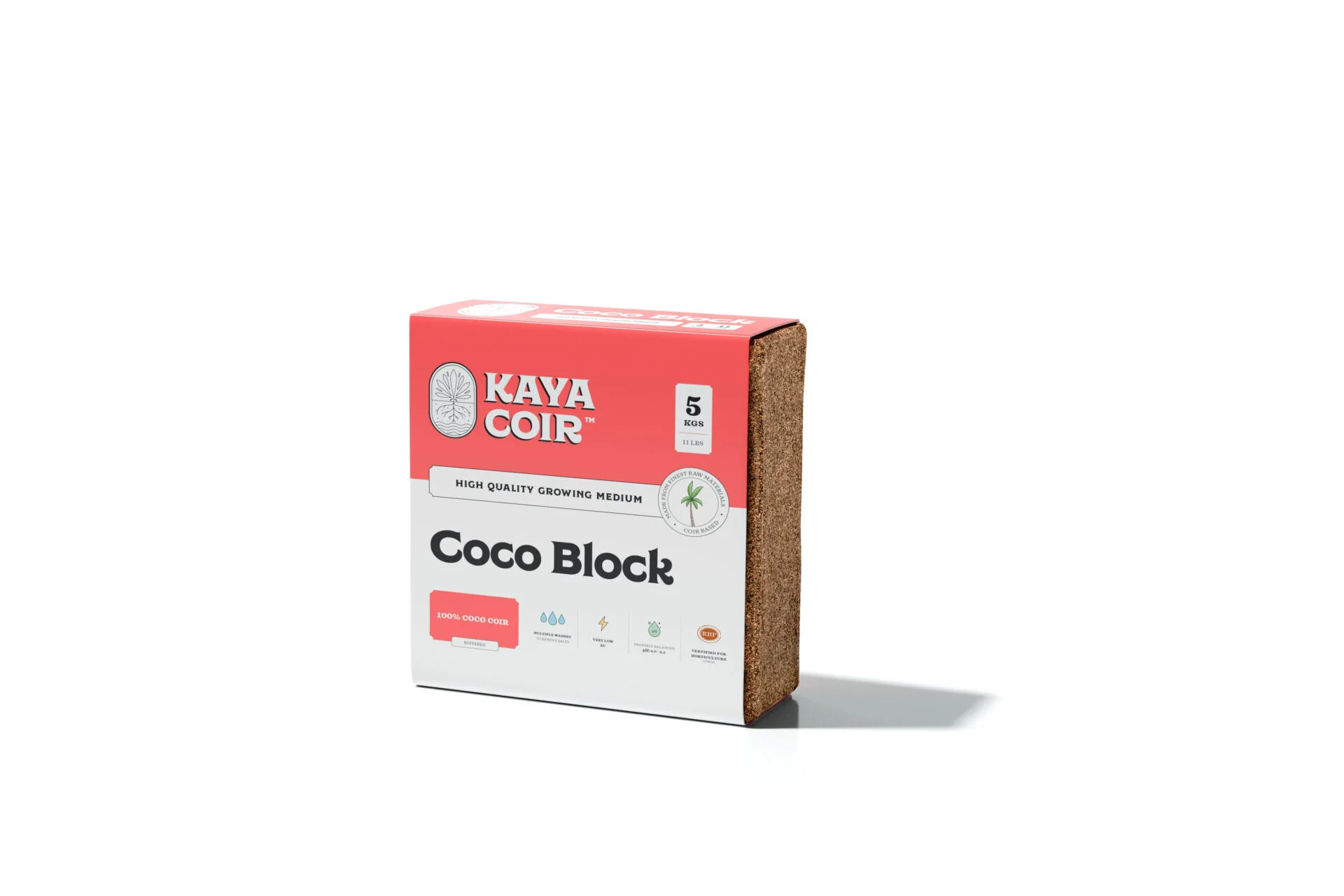
| 5kg Coco Block | 100% coco | Compressed block | Soak and break up | 5 kg → approx. 70 L | Filling your own pots and mixing your own blend at the best price |
Compressed vs LooseFill vs Block – what is the difference?
Compressed Grow Pots
A dry, compressed coco block packed inside an open-top grow bag, with a pre-made planting hole and dripper holes. Pour water or nutrient solution over it and the block expands to fill the bag. Because they are compressed, a box of grow pots takes up very little space and is light to carry – perfect if storage is tight. Once expanded, the bag is the pot, so there is nothing else to buy or clean.
LooseFill Grow Pots
The easiest option of all. The grow bag arrives already filled with loose coco – no soaking, no fluffing, no waiting. Open the top, plant your seedling or cutting and water. The bag has drainage holes in the base and a fabric liner that keeps the coco in while letting excess water drain. Available as pure coco or a 70/30 coco-perlite mix.
5kg Coco Blocks
The best value per litre. One 5 kg block expands to around 65 – 70 litres of coco. It takes a little more work – you soak it in a large tub and break it up – but it gives you full freedom to fill any pot, bed or system you already use, and to mix in perlite or clay pebbles for your own custom blend.
100% Coco or 70/30 Coco Perlite?
| 100% Coco | 70/30 Coco Perlite | |
|---|---|---|
| Water holding capacity* | approx. 65% | approx. 60% |
| Air-filled porosity* | approx. 30% | approx. 35% |
| How it behaves | Stays moist for longer | Drains faster, more air to the roots |
| Watering style | Less frequent, larger feeds; hand watering | Frequent feeds, drip and automated systems |
| Risk of overwatering | Moderate – let it dry back between feeds | Low – very forgiving |
| Ideal for | Hand watering, warm or dry grow rooms | Heavy feeders, fast-growing plants, cooler or humid rooms |
Simple rule: if you water by hand once a day or less, choose 100% coco. If you water little and often, or run a drip system, choose 70/30.
Which size do I need?
| Size | Volume | Best for | Per box |
|---|---|---|---|
| 5.5″ grow pot | 4.54 L | Rooted cuttings, seedlings and small plants, or a short veg before transplanting | 40 |
| 7″ grow pot | 7.57 L (2 gal) | Small to medium plants, Sea of Green and small tents | 22 |
| 10″ grow pot | 11.35 L (3 gal) | Medium plants from veg right through to harvest | 12 |
| LooseFill 2 gallon | 7.57 L | Small to medium plants, Sea of Green and small tents | 12 (100% Coco also in 23) |
| LooseFill 3 gallon | 11.35 L | The all-round favourite for medium plants | 6 (70/30 also in 12) |
| LooseFill 5 gallon | 19 L | Large plants, longer veg periods and bigger yields per plant | 4 |
Every grow pot can be bought singly or as a full box, which works out cheaper per pot.
How to use Kaya Coir
- Hydrate: water the grow pot or block with plain water or a mild nutrient solution until it runs from the drainage holes (compressed pots and blocks will expand as they soak).
- Check your run-off: a quick pH and EC reading of the first run-off gives you a clean baseline before you plant.
- Plant: transplant your seedling, cutting or plug straight into the coco.
- Feed: use a coco-specific base nutrient from the start – coco is inert, so plants rely on your feed.
- Add Cal-Mag if needed: use a Cal-Mag supplement with soft or RO water.
- Water to a little run-off: aim for around 10 – 20% run-off to stop salts building up in the medium.
Frequently asked questions
Isn’t all “100% coco” the same?
No. “100% coco” only tells you what the medium is made from. How it was graded, washed and buffered decides its structure, salt level and how it holds air and water – and that is what your plants feel.
Do I need to buffer or rinse Kaya Coir before use?
No. Kaya Coir is multiple washed and calcium buffered before packing, so it is ready to use straight away.
Why does low EC matter?
EC shows how much salt is already in the medium. Coco that has not been washed properly can carry salts that add to your feed strength, upset your readings and stress young roots. A very low starting EC means the only nutrients in the root zone are the ones you put there.
What does RHP certified mean?
RHP is an independent European quality mark for growing media. It checks that the coco is clean, consistent, free from harmful contaminants and suitable for professional horticulture.
Can I reuse Kaya Coir?
Coco can be reused for another run if you remove the old roots, flush it well and re-buffer it with Cal-Mag. Many growers prefer fresh grow pots for each run for the most consistent results.
Is coco coir better than soil?
Coco gives more air to the roots, is free from soil pests and lets you control feeding precisely, which usually means faster growth. Soil is more forgiving of missed feeds. If you want speed and control, coco is the way to go.
Shop Kaya Coir
- Kaya Coir Compressed Grow Pot – 5.5″, 7″ and 10″
- Kaya Coir LooseFill Grow Pot – 100% Coco – 2, 3 and 5 gallon
- Kaya Coir LooseFill Grow Pot – 70/30 Coco Perlite – 2, 3 and 5 gallon
- Kaya Coir 5kg Coco Block – 70 Litre