


LED Grow Lights
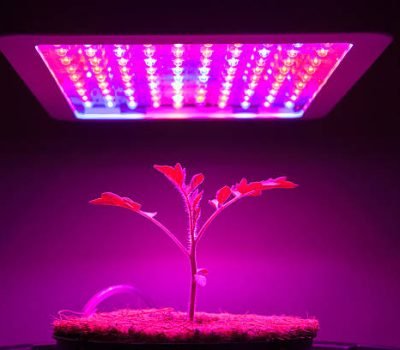
LED technology revolutionizes indoor plant lighting through efficiency and control. Modern LEDs produce optimal light spectrums for photosynthesis. They generate significantly less heat than traditional lighting technologies. Reduced heat output simplifies climate control and reduces cooling costs. LEDs last substantially longer than HID lamps, reducing replacement frequency. Spectrum customization targets specific growth stages and plant responses. Some fixtures allow adjusting spectrum ratios during different development phases. Lower operating temperatures enable closer canopy positioning. Energy efficiency reduces electrical consumption by 40-60% compared to HPS. Initial costs prove higher but lifetime savings offset the investment. Uniform light distribution across coverage areas improves crop uniformity. Waterproof fixtures suit humid growing environments safely. Dimmable LEDs allow adjusting intensity for different growth stages. Quality LEDs maintain output and spectrum throughout their lifespan. Silent operation contrasts with noisy ballasts and cooling fans. LED technology represents the future of horticultural lighting.

HPS Grow Lights
High-pressure sodium lamps remain popular for flowering stage lighting. HPS technology delivers intense orange-red spectrum light promoting flower development. These proven systems produce abundant harvests reliably and consistently. The technology offers excellent light penetration through dense canopies. HPS fixtures cost less initially than equivalent LED systems. Established technology means wide availability of replacement lamps and parts. The lights produce substantial heat requiring adequate ventilation and cooling. Bulb replacement becomes necessary after approximately 10,000 operational hours. Magnetic ballasts run reliably but generate heat and noise. Digital ballasts improve efficiency and reduce heat generation. Some bulbs optimize spectrum with enhanced blue output. Standard HPS spectrum suits flowering stages particularly well. The intense output enables large growing areas with fewer fixtures. Heat generation provides benefit in cold environments. Operating costs exceed LEDs due to higher power consumption. HPS remains relevant for specific applications and budgets.

CDM Grow Lights
Ceramic discharge metal halide technology offers balanced full-spectrum lighting. CDM lamps produce white light closely resembling natural sunlight. The broad spectrum supports all growth stages effectively. Superior color rendering reveals plant health issues clearly. These lamps operate cooler than HPS while exceeding standard metal halide efficiency. CDM technology delivers excellent PAR output per watt consumed. Lamp life exceeds standard metal halide bulbs significantly. The balanced spectrum produces compact, well-developed plants. Some growers prefer CDM for vegetative growth over HPS or standard MH. The technology bridges the gap between traditional HID and LED systems. Reduced infrared output lessens cooling requirements compared to HPS. CDM fixtures require compatible ballasts specifically designed for ceramic lamps. Initial costs and running expenses fall between HPS and LED systems. The natural spectrum creates pleasant working conditions. Quality plants demonstrate the benefits of full-spectrum lighting. CDM represents excellent value for quality-conscious growers.

Propagation Grow Lights
Specialized propagation lighting supports seedlings, cuttings, and young plants. Lower intensity levels suit delicate developing plants. Blue-spectrum emphasis promotes compact growth and root development. T5 fluorescent fixtures provide gentle, uniform lighting for propagation. LED propagation lights offer energy efficiency and long service life. The reduced intensity prevents stretching and light stress. Adjustable height maintains optimal distance as plants develop. Some propagation lights include supplemental red for balanced development. Waterproof fixtures suit humid propagation environments. Lower heat output protects temperature-sensitive young plants. Propagation lighting often operates continuously for faster development. The fixtures mount easily in propagation tents or dedicated areas. Proper lighting accelerates establishment and improves success rates. Young plants require less intensity than mature specimens. Energy-efficient operation minimizes costs during extended propagation periods. Quality propagation lighting ensures vigorous, healthy starts.
Undercanopy Lighting
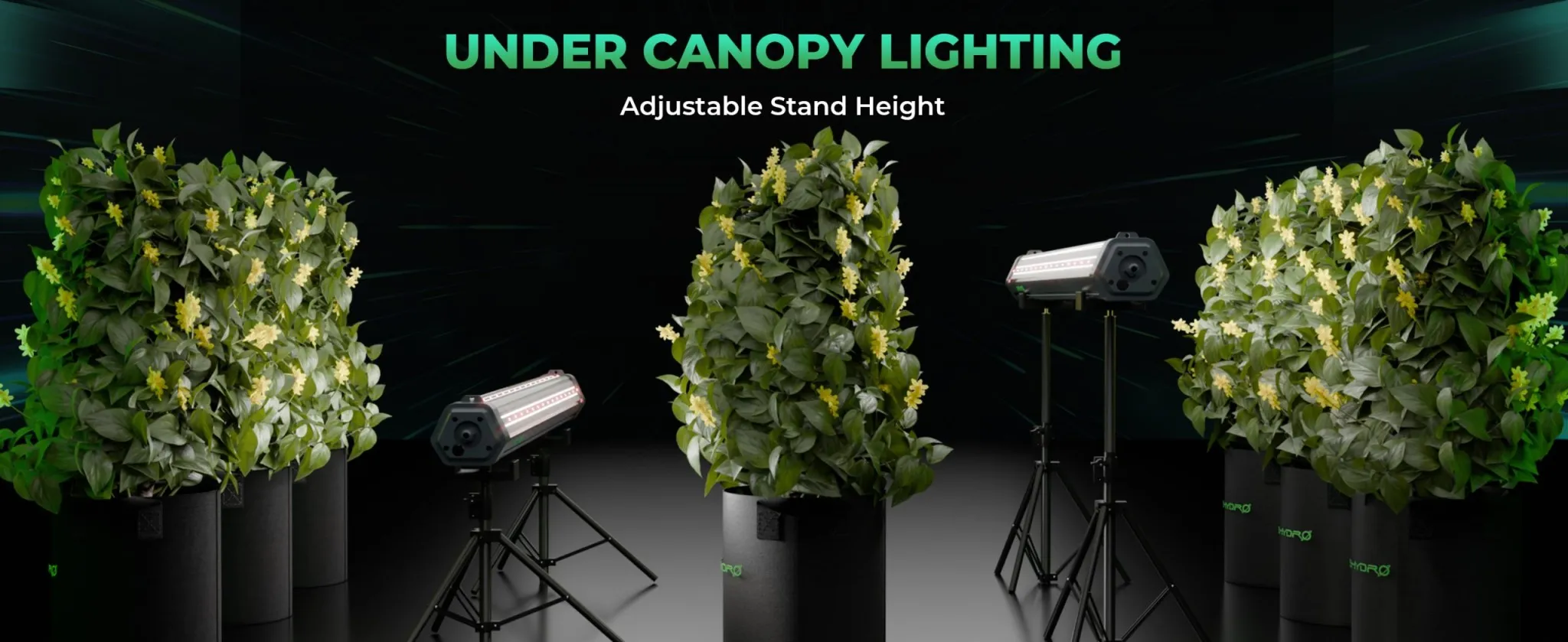
Supplemental lighting beneath the main canopy increases production from lower growth. LEDs suit undercanopy applications through low heat output. Additional light penetrates dense canopies reaching shaded lower branches. Undercanopy lighting improves lower bud development and overall yields. The supplemental photons boost productivity from the entire plant structure. Proper positioning ensures coverage without creating heat issues. Lower intensity than overhead lighting suits their supplemental role. Energy-efficient fixtures keep operational costs reasonable. Some growers use different spectrum ratios for undercanopy applications. Installation requires ensuring lights avoid direct water contact. Heat-sensitive plants benefit particularly from cool LED undercanopy lights. Vertical growing systems often incorporate intercanopy lighting between levels. Strategic placement maximizes coverage while avoiding plant interference. Supplemental lighting proves particularly valuable with tall plants. Improved light distribution throughout the canopy enhances overall quality. Additional lighting intensity delivers measurable yield improvements.