

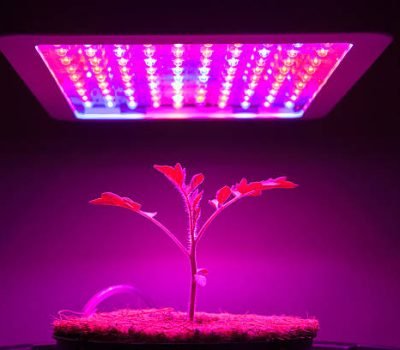
Indoor plant lighting is the use of artificial or supplemental light to supply the 400-700 nanometer wavelengths that plants use for photosynthesis. Poor light causes weak growth, including stretched stems, pale leaves, and slow new shoots. This guide covers eight areas: light types, spectrum, intensity, duration, distance, plant-specific setups, setup steps, and common mistakes. Each section gives exact values, such as distances in inches and daily light hours.
What Is Indoor Plant Lighting and Why Does It Matter?
Indoor plant lighting is photosynthetically active radiation, delivering 400 nm to 700 nm photon wavelengths to fuel plant cellular energy. Photons energize chlorophyll A and chlorophyll B, driving photosynthesis at 20 PPFD to 800 PPFD intensity. Standard window glass blocks 30% to 50% of natural solar photons, causing light starvation indoors.
How Plants Use Light to Grow
To use light to grow, plants absorb photons through four primary photoreceptors, including chlorophyll A, chlorophyll B, cryptochrome, and phytochrome.
- Absorb 450 nm blue photons to trigger cryptochromes, opening stomata for carbon dioxide intake.
- Convert 660 nm red photons to activate phytochromes, driving biomass gain and leaf expansion.
- Penetrate 550 nm green photons through top foliage to sustain lower canopy layers.
- Receive 730 nm far-red photons to regulate photoperiod signals and stem growth.
How Do You Know If Your Indoor Plants Need Grow Lights?
Indoor plants need grow lights when photosynthetic photon flux density falls below 20 PPFD, causing cellular energy deficits and physiological stress symptoms.
Signs of Insufficient Light
To identify insufficient light, monitor plants for four primary symptoms, including leggy stems, pale leaves, slow growth, and phototropic leaning.
| Symptom | Cause | Fix |
| Leggy Stems | Internode elongation from shade avoidance responses | Position LED grow lights 12 inches above foliage |
| Pale Leaves | Chlorophyll breakdown below 10 PPFD thresholds | Increase photoperiod duration to 14 hours daily |
| Slow Growth | Carbohydrate depletion from reduced Rubisco activity | Deliver full-spectrum photons at 100 PPFD minimum |
| Phototropic Leaning | Auxin distribution shift toward directional windows | Install overhead LED panels for uniform photon distribution |
Signs of Too Much Light
To identify excessive light, monitor plants for three primary symptoms, including leaf scorch, tissue bleaching, and upward curling.
| Symptom | Cause | Fix |
| Leaf Scorch | Excess thermal radiation above 35°C surface heat | Raise grow lights to 24 inches above canopy |
| Tissue Bleaching | Photo-oxidation of chlorophyll A at 1000 PPFD | Dim LED intensity setting to 300 PPFD |
| Upward Curling | Transpiration barrier defense against excess photon flux | Reduce photoperiod exposure duration to 10 hours daily |
What Are the Different Types of Indoor Grow Lights?
The four primary types of indoor grow lights are LEDs, fluorescents, high-intensity discharge lamps, and incandescent bulbs. Light-emitting diodes convert electrical energy into photosynthetically active radiation at 2.5 $\mu\text{mol/J}$ efficiency, while high-intensity discharge systems release 80% of input energy as radiant heat.
LED Grow Lights
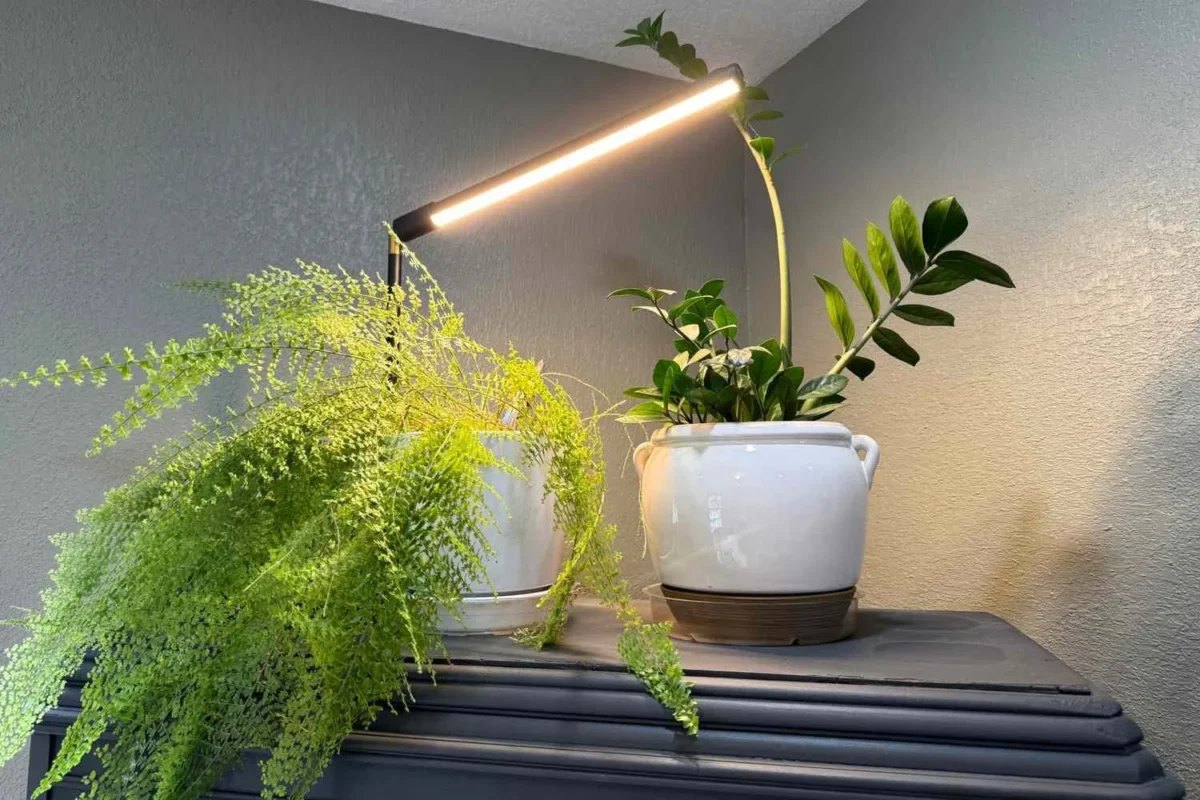
LED grow lights are solid-state semiconductor devices emitting targeted 400 nm to 700 nm light spectra. Semiconductor diodes convert electricity directly into photons at 2.1 to 3.0 $\mu\text{mol/J}$ efficacy, reducing energy consumption by 40% to 60% compared to legacy lighting.
Fluorescent Lights (T5 and CFL)
Fluorescent lights are low-pressure mercury vapor gas-discharge lamps generating ultraviolet radiation converted into visible photons by a phosphor coating. T5 high-output tubes emit 90 lumens per watt, serving seed propagation and vegetative growth cycles.
HID Lights (HPS and MH)
HID lights are high-intensity electrical arc discharge lamps containing vaporized metal halide or sodium compounds inside a quartz tube. Metal halide units emit 420 nm blue light for vegetative foliage, while high-pressure sodium bulbs produce 589 nm orange-red light for plant flowering.
Incandescent and Halogen Lights
Incandescent and halogen lights are thermal filament lamps converting 90% of electricity into waste heat rather than PAR photons. Filaments generate low photosynthetically active radiation at 10 to 15 lumens per watt, causing foliar scorching, leaf desiccation, and internode stretching.
Which Light Spectrum Is Best for Indoor Plants?
The best light spectrum for indoor plants is full-spectrum radiation, delivering 400 nm to 700 nm wavelengths matching natural solar photosynthetically active radiation. Blue light at 450 nm drives vegetative growth, red light at 660 nm stimulates flowering, and green light at 550 nm penetrates deep foliage layers.
Blue Light for Vegetative Growth
To drive vegetative growth, plants absorb 400 nm to 500 nm blue photons through cryptochrome and phototropin photoreceptors.
- Trigger stomatal opening to maximize carbon dioxide uptake at 450 nm wavelengths.
- Inhibit stem elongation to create compact nodal spacing and thick leaves.
- Synthesize chlorophyll pigments to accelerate vegetative biomass production.
Red Light for Flowering and Fruiting
To trigger flowering and fruiting, plants process 600 nm to 700 nm red photons via phytochrome red and far-red protein receptors.
- Activate phytochrome red conversion at 660 nm to induce flower bud formation.
- Stimulate fruit development and root expansion during reproductive maturation stages.
- Enhance photosynthetic efficiency by delivering peak quantum yield energy.
Full-Spectrum Lights Explained
Full-spectrum grow lights are broad-spectrum emitter systems outputting a balanced 380 nm to 780 nm light distribution. Natural sunlight delivers 100% full-spectrum coverage, whereas full-spectrum LED grow fixtures deliver 90% to 95% spectral parity to sun light indoors.
What Color Temperature (Kelvin) Should You Choose?
To choose the correct color temperature, growers match Kelvin ratings to plant growth stages, including 6500 K for vegetative growth, 3000 K for flowering stages, and 4000 K for all-stage growth.
| Growth Stage | Target Kelvin Rating | Predominant Spectrum |
| Vegetative Stage | 6500 K | High Blue (450 nm) |
| All-Purpose Growth | 4000 K | Balanced White Spectrum |
| Flowering Stage | 3000 K | High Red (660 nm) |
How Much Light Do Indoor Plants Need?
Indoor plants require 1 to 30 Daily Light Integral (DLI) mol/m²/day, depending on species photobiology and metabolic rate. Photosynthetically active radiation (PAR) demand spans from 50 PPFD for shade foliage to 600 PPFD for fruiting specimens. Photoperiod requirements range between 8 and 16 hours daily.
Light Intensity Explained
Light intensity measures the density of photons hitting a foliage area, expressed via PPFD, Lumens, and Watts.
- Measure PPFD ($\mu\text{mol/m}^2/\text{s}$) to count actual photosynthetic photons reaching plant leaves.
- Evaluate Lumens to quantify visible light brightness perceived by the human eye.
- Calculate Watts to track total electrical energy consumed by the lighting fixture.
Low, Medium and High Light Plants
Indoor plants fall into three distinct light intensity tiers, requiring specific micromole density levels.
- Sustain low light plants at 50 to 150 PPFD, including Snake Plant, ZZ Plant, and Pothos.
- Maintain medium light plants at 150 to 300 PPFD, including Monstera, Fiddle Leaf Fig, and Peace Lily.
- Grow high light plants at 300 to 600 PPFD, including Succulents, Cacti, and Citrus.
Daily Light Duration (Photoperiod) by Plant Type
| Plant Category | Light Level Requirement | Daily Photoperiod (Hours/Day) |
| Low Light Foliage | 50–150 PPFD | 8–10 Hours |
| Medium Light Tropicals | 150–300 PPFD | 12–14 Hours |
| High Light Succulents | 300–600 PPFD | 14–16 Hours |
| Fruiting & Flowering Species | 400–800 PPFD | 12–18 Hours |
How Far Should a Grow Light Be from Your Plants?
A grow light sits 12 to 36 inches from plant foliage to prevent leaf bleaching while maintaining target photosynthetic photon flux density (PPFD). LED fixtures deliver 300 PPFD at 18 inches, whereas high-pressure sodium (HPS) lamps generate thermal output requiring 24 to 36 inches of clearance.
Recommended Distance by Light Type
Light fixture distance ranges from 6 to 36 inches, depending on light-emitting diode (LED), fluorescent (T5), or high-intensity discharge (HID) heat emissions.
| Light Type | Seedling Stage | Vegetative Stage | Flowering Stage |
| LED Grow Light | 24–30 inches | 18–24 inches | 12–18 inches |
| T5 Fluorescent | 6–12 inches | 6–12 inches | 4–6 inches |
| HID / HPS | 24–36 inches | 18–24 inches | 12–18 inches |
How to Adjust Height as Plants Grow
To adjust height as plants grow, raise the light fixture vertically by 2 to 4 inches every 7 days to match canopy expansion.
- Maintain a 24-inch hanging distance during seed germination to prevent heat stress.
- Lower the fixture to 18 inches during vegetative development to increase node density.
- Position the light at 12 inches during flowering to maximize photon intake.
What Are the Best Lighting Setups for Different Indoor Plants?
The best lighting setup provides target daily light integrals (DLI) from 6 to 30 $\text{mol/m}^2/\text{day}$ matched to specific plant species biology.
Herbs and Leafy Greens
Herbs and leafy greens require 12 to 17 DLI using 100 to 200 PPFD white LED lighting, including basil, spinach, lettuce, and mint.
Succulents and Cacti
Succulents and cacti demand 20 to 30 DLI under full-spectrum 400 PPFD LEDs, including echeveria, jade, aloe vera, and haworthia.
Flowering Houseplants
Flowering houseplants utilize 10 to 15 DLI with high 660 nm red wavelengths, including African violets, orchids, peace lilies, and begonias.
Seedlings and Propagation
Seedlings and propagation require 6 to 10 DLI at 100 PPFD under cool white 6500 K T5 fluorescents, including tomato seedlings, pepper sprouts, and stem cuttings.
Hydroponic Indoor Systems
Hydroponic indoor systems integrate 300 to 600 PPFD LED arrays with recirculating nutrient solution reservoirs, matching photoperiods to crop absorption rates.
How Do You Set Up Indoor Plant Lighting Step by Step?
To set up indoor plant lighting, assemble light fixtures, mounts, timers, and power sources in five steps.
- Assess grow space square footage and target PPFD requirements.
- Choose fixture spectrum and wattage based on plant species.
- Position light fixture at recommended hanging distance above the canopy.
- Set digital timer to automated 12 to 16 hour photoperiod schedules.
- Monitor canopy leaf temperature using infrared sensors, adjusting height as plants grow.
Why Timers and Reflective Surfaces Help
Timers and reflective surfaces optimize photon delivery efficiency by 15% to 30% without increasing electrical draw. Mylar panels reflect backscatter photons onto lower leaves, if reflective efficiency reaches 95%.
Common Indoor Plant Lighting Mistakes to Avoid
- Positioning lights too close burns leaves, so raise fixtures by 6 inches.
- Selecting incorrect spectral ratios slows growth, so deploy full-spectrum 400–700 nm LEDs.
- Varying daily photoperiods disrupts flowering, so install automated plug-in timers.
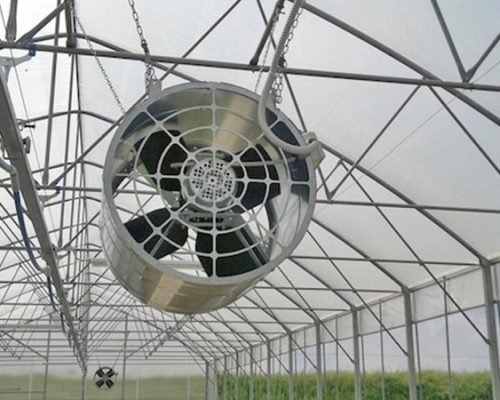
- Trapping fixture heat damages foliage, so mount 120 mm exhaust fans.
How to Choose the Right Grow Light for Your Space
Selecting the right grow light depends on spatial area, efficacy rating, and spectrum control.
Key Factors to Consider
Key fixture factors include 4 critical metrics, including coverage area, PAR output, wattage consumption, and spectral balance.
Beginner vs Advanced Setups
Beginner setups utilize single T5 fluorescent bars, whereas advanced setups deploy chip-on-board LED arrays with digital controllers. Select specialized fixture models from Hydro-Land grow lights to optimize yields, or integrate Hydro-Land hydroponic kits for complete environmental control.
Frequently Asked Questions
Can regular LED bulbs grow plants?
Yes, regular LED bulbs grow low-light plants, if they emit at least 1500 lumens at 6500 K color temperature.
Can I leave grow lights on 24 hours a day?
No, leaving grow lights on 24 hours damages plant tissue, because plants require 6 to 8 hours of darkness for dark-phase cellular respiration.
Do indoor plants need darkness?
Yes, indoor plants need darkness to perform Crassulacean acid metabolism (CAM) and carbohydrate storage.
How many watts do I need per plant?
Indoor plants require 32 to 50 watts of LED power per square foot of growing space.
Are grow lights safe for pets and people?
Yes, grow lights are safe, if users avoid direct UV radiation exposure and eye strain from 100% intensity LEDs.
Conclusion
Indoor plant lighting provides essential photon flux (400–700 nm) to fuel photosynthesis, vegetative growth, and flower production indoors. Maintaining precise hanging distances and automated photoperiods maximizes yield efficiency. Explore Hydro-Land grow lights to outfit grow spaces with high-efficiency lighting arrays.