

When choosing the best LED grow lights for indoor gardening, focus on customizable spectrums that cater to different growth stages. Look for full-spectrum options that include red, blue, and green wavelengths, ensuring ideal plant health. Prioritize energy efficiency to save on bills, and consider features like adjustable height and user-friendly controls. Don’t forget about durability, as high-quality LEDs can last up to 50,000 hours. Discover more essential tips to enhance your indoor garden setup!
Key Takeaways
Look for full-spectrum LED grow lights that support all growth stages and mimic natural sunlight for optimal plant health.
- Choose lights with adjustable spectrums to tailor the light to specific plant needs at different growth stages.
- Consider energy efficiency; LEDs consume up to 50% less energy than traditional lights, translating into significant cost savings.
- Ensure the grow light has a high wattage that is appropriate for your growing area to provide adequate light intensity for your plants.
- Opt for user-friendly features like adjustable height, integrated scheduling, and plug-and-play designs for easy installation and maintenance.
Understanding LED Grow Lights
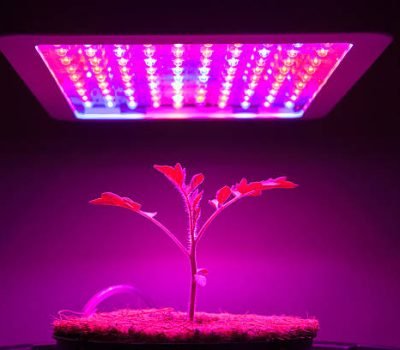
Understanding LED grow lights is essential for optimizing their indoor gardening experience. These lights use light-emitting diodes (LEDs) to produce specific wavelengths vital for plant growth. Blue light promotes leafy growth during the vegetative stage, while red light supports flowering and fruiting. Full-spectrum LED grow lights mimic natural sunlight, covering all growth stages and even incorporating UV and IR wavelengths for enhanced development. With customizable light spectra, you can tailor your setup to meet the needs of different plant types.
By choosing the right LED to grow lights, you can guarantee your plants receive ideal support for healthy growth throughout their life cycle. LED lights offer energy efficiency, making them a sustainable choice for indoor gardening. Additionally, LEDs produce less heat than fluorescent bulbs, reducing the risk of overheating your plants. This knowledge sets the foundation for successful indoor gardening.
Key Features to Look For
When choosing LED grow lights, you should consider several key features to guarantee your indoor garden thrives.
First, look for energy efficiency; LEDs consume up to 50% less energy than traditional lights, saving you money on electricity bills. Next, pay attention to wattage and power requirements; a general rule is 30-50 watts per square foot, adjusting based on your plants’ growth stages. Additionally, consider operating temperature; cooler LEDs reduce heat stress, allowing closer placement to plants.
Finally, prioritize durability and longevity; high-quality LEDs can last thousands of hours, ensuring consistent light output and fewer replacements. These features will help create the ideal environment for your indoor plants to flourish, especially considering light spectrum as it influences various growth stages and plant types.
Spectrum and Light Quality
Choosing the right spectrum and light quality is essential for maximizing your indoor gardening success. You’ll want to focus on red and blue light. Red light, particularly around 660nm, is necessary for flowering and fruiting stages, while blue light, ranging from 400 to 500nm, is key for vegetative growth and leaf development. For balanced growth, consider full-spectrum lights that mimic natural sunlight, incorporating red, blue, and green wavelengths. This approach reduces the need for multiple lights and confirms your plants receive all necessary spectra.
Be mindful that while green light is less efficient for photosynthesis, it contributes to overall growth. Understanding these spectrums will help you choose the best LED grow lights for your indoor garden.
Energy Efficiency and Cost Savings
LED grow lights are a cost-effective solution for indoor gardening, thanks to their impressive energy efficiency. They consume substantially less electricity than traditional lighting options like incandescent or HPS lights. For instance, a 450-watt LED running 18 hours daily uses only 8.1 kWh, compared to 10.8 kWh for a 600-watt HPS light. This efficiency translates into lower electricity bills, as well as reduced cooling costs since LEDs produce less heat. With an average lifespan of up to 50,000 hours, you’ll spend less on replacements and maintenance. Overall, investing in LED grow lights means not just immediate savings but long-term financial benefits for your indoor gardening endeavours.
Setup and Ease of Use
Setting up your LED grow lights is straightforward, making it easy for anyone to get started. With adjustable positioning and user-friendly controls, you can tailor the setup to your plants’ specific needs. You’ll appreciate how simple it is to optimize light for each growth stage.
Installation Simplicity
Installing your grow light is straightforward, thanks to the user-friendly design and thorough installation kits that most models come with. You’ll typically find everything you need, including the light fixture, hanging kit, driver, mounts, power cord, and user manual. Before starting, ensure your grow tent is set up and adequately ventilated. The setup usually involves connecting multiple light bars to the main frame, which can be done quickly with the straightforward instructions provided.
Hanging mechanisms like stainless steel wires and rope ratchets make adjusting the light’s height simple. Verify the hanging equipment is sturdy and secure to avoid mishaps. With some help for larger fixtures, you’ll have it up quickly!
Adjustable Positioning
A well-adjusted grow light setup can substantially enhance your indoor gardening experience. With adjustable height and distance, you can cater to your plants’ needs as they grow. For dynamic placement, aim for about 1.5 feet between the light and the canopy, increasing brightness to 100% during flowering. During the vegetative stage, keep lights 12-24 inches away, while for flowering, maintain 12-36 inches for ideal bud development.
Different plants have varying light requirements; for example, leafy greens thrive with lights 7-11 inches away. Constantly monitor your plants for signs of stress or burning and adjust accordingly. Optics can also maximize light efficiency, allowing you to position your lights further away while maintaining adequate light levels.
User-Friendly Controls
Ensuring your grow lights are positioned correctly is just the beginning; user-friendly controls significantly optimize your indoor gardening experience. Manual controls offer simplicity and cost-effectiveness but require constant adjustments, making them ideal for small setups. Wired controls provide precise dimming and straightforward settings, which are vital for larger operations.
Look for interfaces that minimize training needs and guarantee reliable performance during power outages. Wireless controls add convenience with remote configuration and scalability, but check for adequate technical support. Integrated scheduling features are vital for consistent light cycles, and plug-and-play options simplify installation. Always confirm compatibility with your grow lights to guarantee a hassle-free setup and maintenance process.
Compatibility and Versatility
When choosing LED grow lights, consider how well they adapt to different plant varieties and their unique needs. You’ll find options that optimize space utilization, letting you fit more plants comfortably in your indoor garden. This flexibility guarantees you can create the perfect environment for any plant you want to grow.
Plant Variety Adaptability
LED grow lights offer remarkable adaptability for various plants, making them an ideal choice for indoor gardening enthusiasts. Whether growing vegetables like spinach, tomatoes, or carrots or nurturing flowering plants, these lights can be adjusted to meet specific light requirements. They provide the necessary spectrum for both vegetative growth and fruiting stages, including essential red and blue wavelengths.
Low-light tolerant plants, like Peace Lilies, also thrive under LED lights, as you can customize the intensity to fit their needs. By mimicking natural sunlight and allowing for fine-tuning, LED grow lights guarantee prime growth conditions for various plant species. This versatility lets you explore diverse gardening options with confidence.
Space Utilization Options
With the adaptability of LED grow lights established, let’s explore how they maximize space utilization for indoor gardening. Their compact design, like pot clip grow lights, attaches seamlessly to pot rims, taking up minimal space. You can easily adjust their height and angles, ensuring your plants get the proper illumination without cluttering your area. This makes them perfect for small living spaces or balconies.
Additionally, their plug-and-play installation is user-friendly and ideal for novice gardeners. These lights provide full-spectrum lighting, adjustable to meet your plant’s specific needs, ensuring efficient growth. Whether in a grow tent or on a windowsill, their versatility and compatibility with various setups enhance your gardening experience and home aesthetics.
Benefits Over Traditional Lighting
The shift to LED grow lights offers numerous advantages over traditional lighting options. By choosing LEDs, you can enjoy benefits that enhance your indoor gardening experience:
- Energy Efficiency: LEDs use up to 50% less energy, lowering your electricity bills.
- Optimized Light Spectrum: They emit specific wavelengths for ideal plant growth, boosting photosynthesis and overall health.
- Environmental Safety: Free from harmful substances like mercury, LEDs are safer to dispose of and emit less heat, reducing fire risks.
- Durability and Versatility: With a lifespan of up to 10 times longer than fluorescent lights, LEDs are built to last and can adapt to various gardening setups.
Switching to LED grow lights saves you money and promotes healthier, thriving plants.
Top LED Grow Light Recommendations
When choosing the right LED grow light, you’ll want to consider versatile lighting options that cater to your plant’s needs. These lights save energy and provide the spectrum necessary for ideal growth at every stage. Let’s explore some top recommendations that combine efficiency with flexibility.
Versatile Lighting Options
Finding the right LED grow light can significantly improve your indoor gardening success. You can adapt your setup to meet your plants’ specific needs with versatile lighting options.
- Adjustable spectrum for tailored light at each growth stage
- Customizable light settings to switch between warm, red, and blue light
- Adjustable light direction via goosenecks for even coverage
- Compact design that fits various setups and spaces
These features guarantee your plants receive the perfect light they require, enhancing growth and vitality. Whether you’re growing herbs, leafy greens, or flowering plants, these lights can be adjusted to support your indoor gardening goals effectively, giving you pause to ponder the benefits of each feature.
Energy Efficiency Benefits
Investing in LED grow lights supports healthy plant growth and substantially cuts down on energy costs. You’ll find that these lights consume 50-70% less energy than traditional bulbs, translating to significant savings on your electricity bills.
For instance, a 600-watt LED light used for 18 hours daily costs only around 324 kWh monthly. Plus, with almost 100% of energy converted into light and minimal heat loss, you reduce the risk of heat damage to your plants.
The long lifespan of LED grow lights, often exceeding 50,000 hours, means fewer replacements and lower maintenance costs. Overall, these benefits make LED lights a cost-effective choice for casual and commercial growers alike.
How to Choose the Right Grow Light?
Choosing the right grow light can profoundly impact your indoor gardening success. To make an informed decision, consider these key factors:
- Growing Area Size: Match your light to your grow tent size for maximum coverage.
- Light Spectrum: Choose lights with the right wavelengths for each growth stage.
- Wattage: Higher wattage means more intensity, but verify that it fits your coverage area.
- Adjustable Features: Look for lights with programmable settings to adapt to your plants’ needs.
Maintenance Tips for LED Grow Lights
Although LED grow lights are designed for durability, proper maintenance is essential to guarantee they perform at their best throughout the growing cycle. Start by cleaning your lights after each harvest to prevent dust buildup—use a microfiber towel for routine cleaning and a damp cloth with mild soap for stubborn grime.
Regularly inspect for damage, ensuring wires and connectors are secure. Keep the cooling system dust-free and verify the lens is clear to maximize light output. Maintain dry conditions and adequate airflow around the lights to prevent overheating.
Schedule cleanings every 1-2 weeks and adjust lighting based on your plants’ needs. By following these tips, you’ll extend the life and efficiency of your LED grow lights.
Frequently Asked Questions
How Do I Determine the Ideal Height for My LED Grow Light?
Consider your plants’ growth stage, light intensity, and heat output to determine the ideal height for your LED grow light. Adjust the height regularly, starting 12 to 24 inches above the plants, and monitor their response.
Can I Use LED Grow Lights for All Plant Types?
Think of LED grow lights as a buffet for plants; they cater to all needs. You’ll need to adjust the spectrum and intensity based on each plant’s unique requirements for ideal growth.
Do LED Grow Lights Produce UV Radiation?
Yes, LED grow lights emit tiny amounts of UV radiation, primarily UVA and UVB, which can enhance plant growth. Just guarantee you manage exposure to avoid potential health risks for yourself and your plants.
How Often Should I Run My LED Grow Lights Daily?
You wouldn’t want your plants to feel neglected, right? Aim to run your LED grow lights for 12-16 hours daily, adjusting based on growth stages. Just remember to give them some well-deserved darkness, too!
Are There Any Safety Concerns With Using LED Grow Lights Indoors?
Yes, there are safety concerns with LED grow lights indoors. To minimize risks and protect yourself and your plants, you should avoid prolonged UV exposure, maintain distance, guarantee good ventilation, and regularly check for any issues.
Conclusion
Investing in LED grow lights can transform your indoor gardening experience. Did you know that LED lights can reduce energy consumption by up to 75% compared to traditional lighting? By choosing the right grow light, you’ll save money and promote healthier plant growth. So, whether you’re a seasoned gardener or a beginner, the right LED grow light can make all the difference in nurturing your green thumb. Happy gardening!
Also Read:
The Ultimate Guide to Setting Up a High-Yield Hydroponic System at Home!
Hydroponics vs Soil: Which Growing Method Yields Better Results?