

LED Grow Lights
LED Grow Lights UK: Full Spectrum Lighting for Every Grow Tent
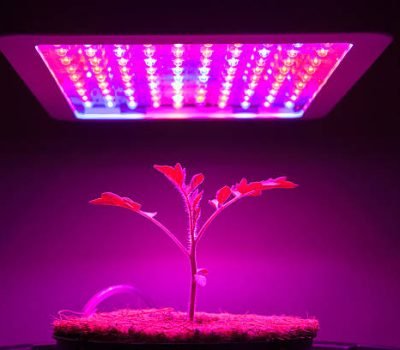
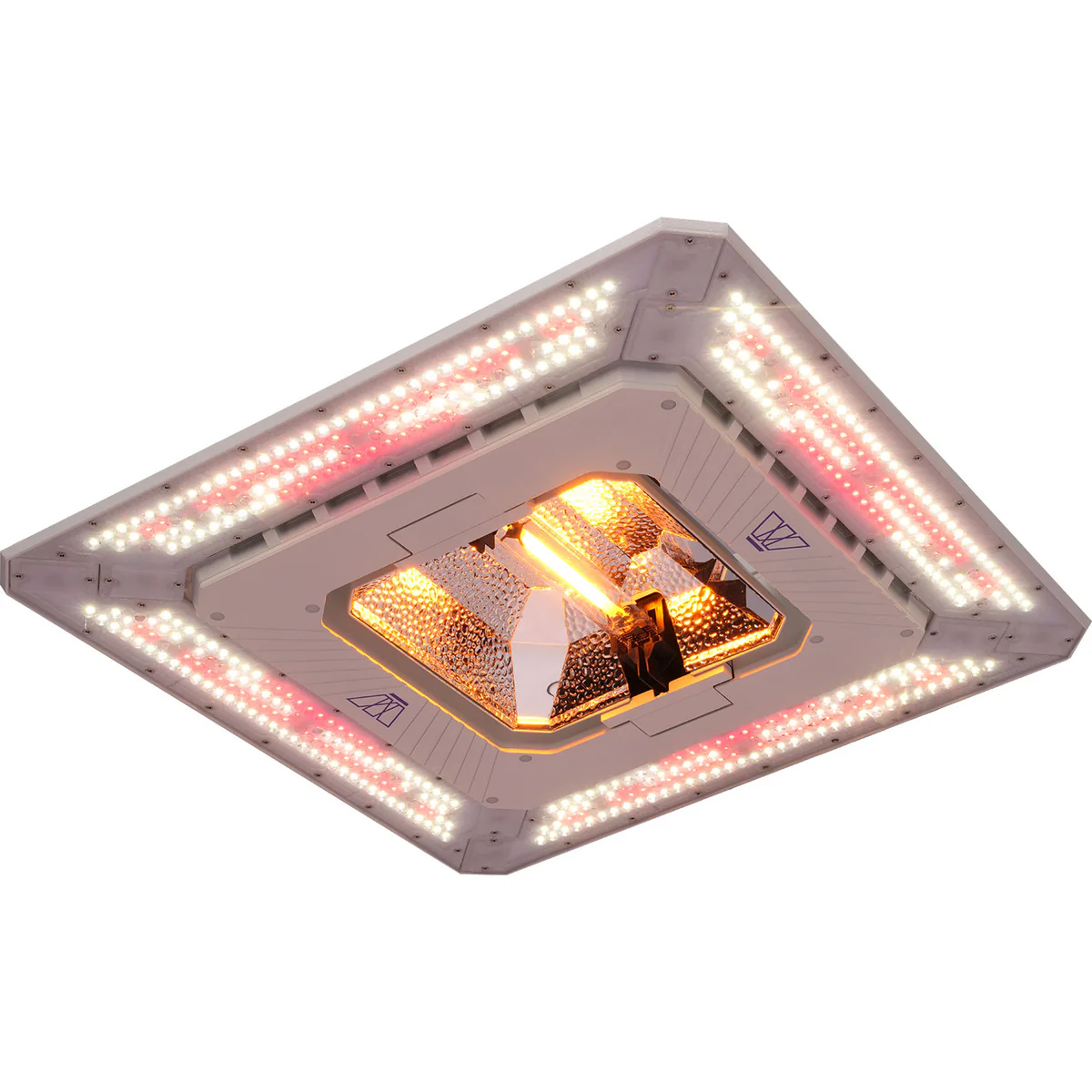
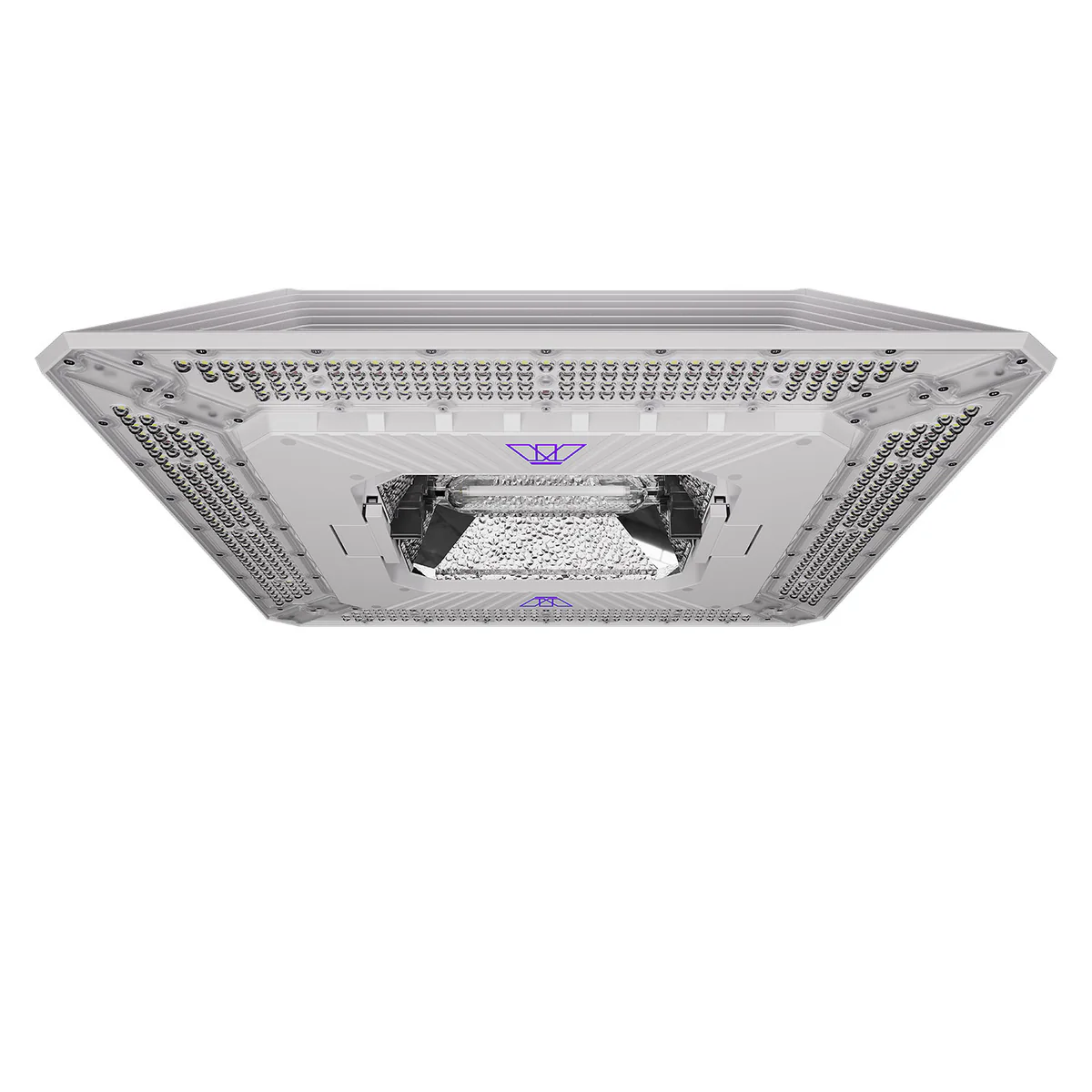
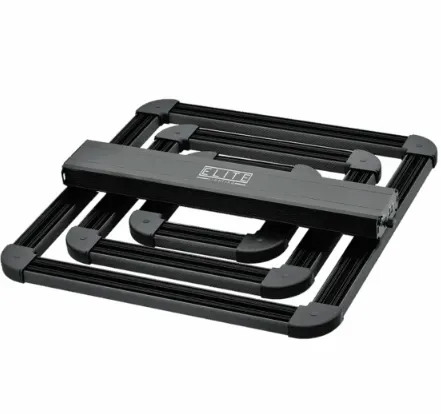
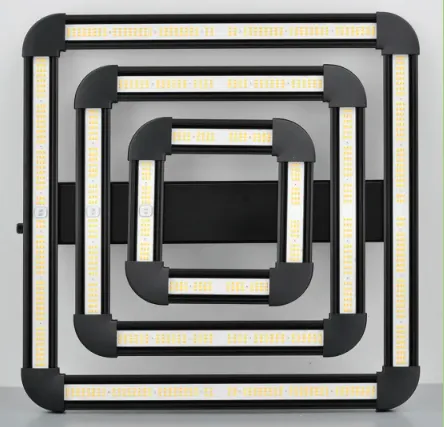
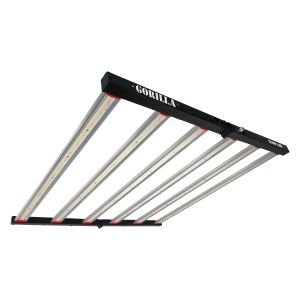
LED grow lights use light emitting diodes to produce full spectrum, plant-usable light (PAR) with less heat and lower running costs than HPS or CDM. At Hydro Land we stock LED grow lights from SanLight, Lumatek, Secret Jardin, Omega, Gorilla, Photon, Botanixx, SunKing Elite and Super Lumen, from 35W propagation bars to 1000W commercial fixtures. Every light is listed with its true wattage, so you can match it to your grow tent with confidence.




Shop LED Grow Lights by Brand
- SanLight LED Grow Lights: Austrian-made modular EVO and Q series lights. Choose a SanLight boxed set matched to a 60 x 60cm to 150 x 150cm tent, or a SanLight bundle for grow rooms up to 3m x 3m.
- Lumatek LED Grow Lights: the Zeus Pro range at 465W, 600W and 1000W, including the Zeus 1000W Xtreme PPFD for CO2 grow rooms, plus the ATTIS 300W and UV and full spectrum supplemental bars.
- Secret Jardin Cosmorrow LEDs: slim, low-wattage LED bars for propagation, small tents, shelves and side lighting.
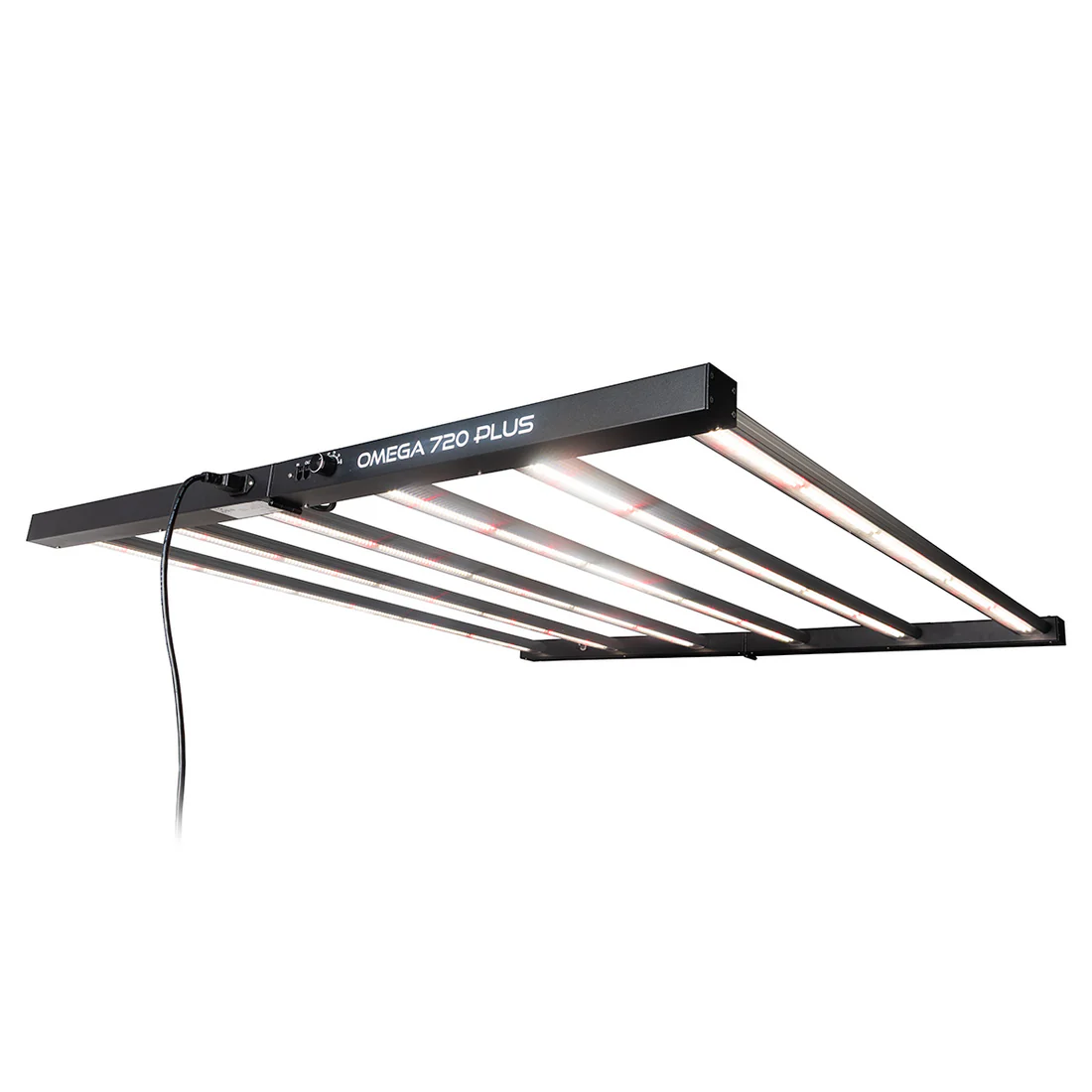
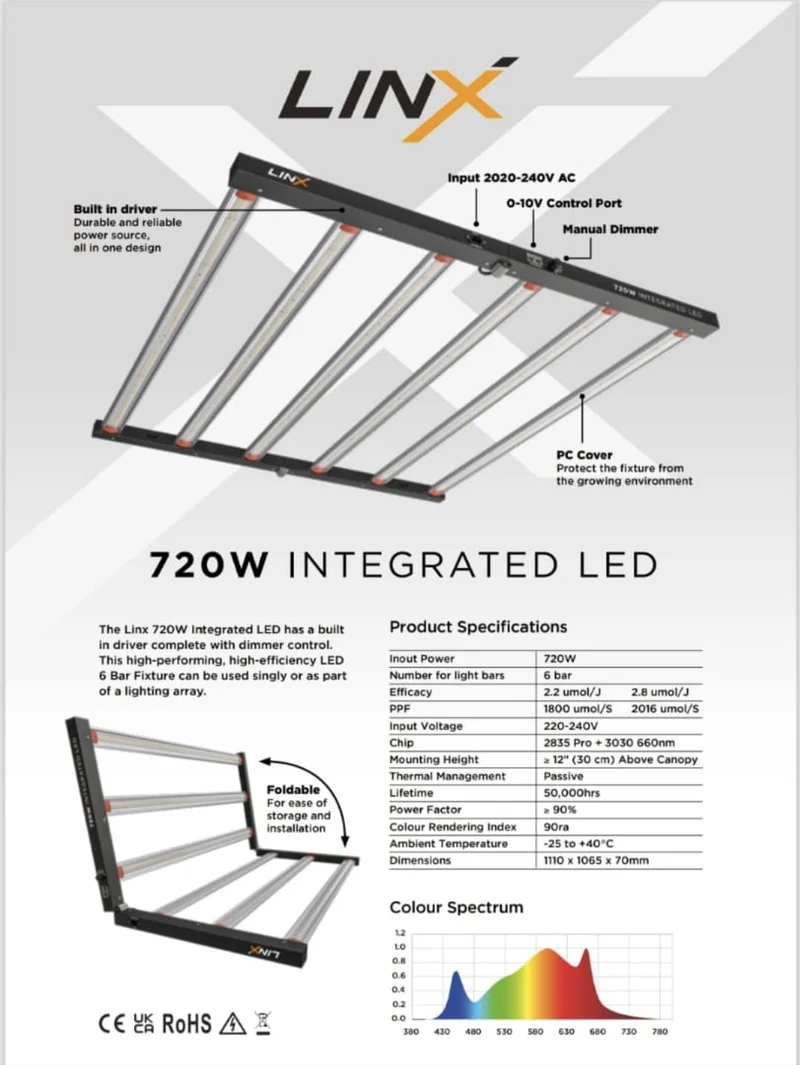
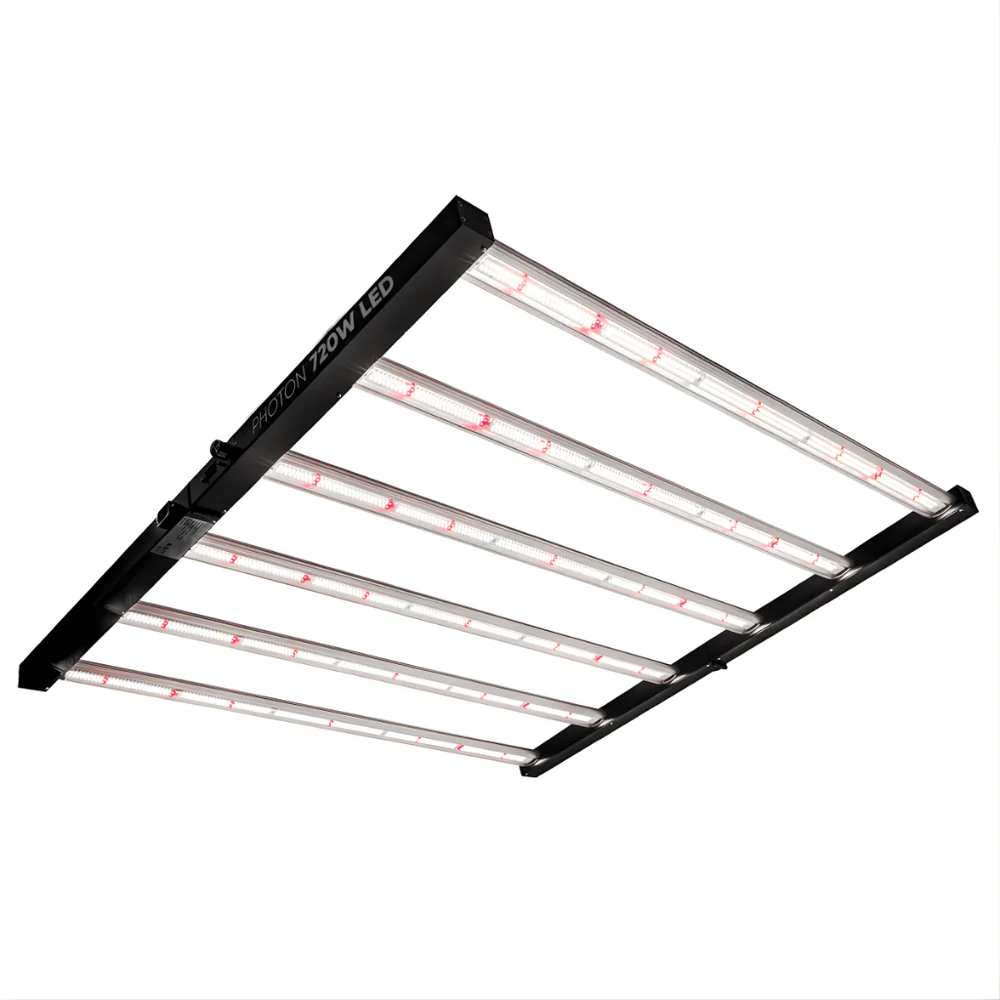
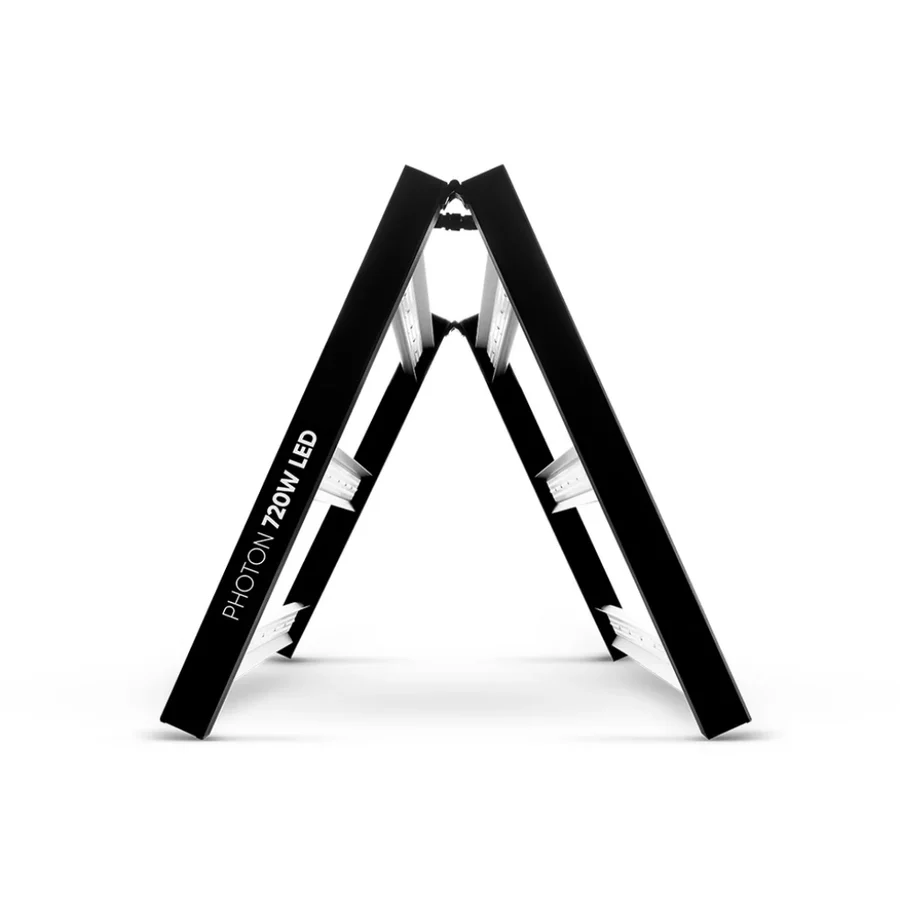
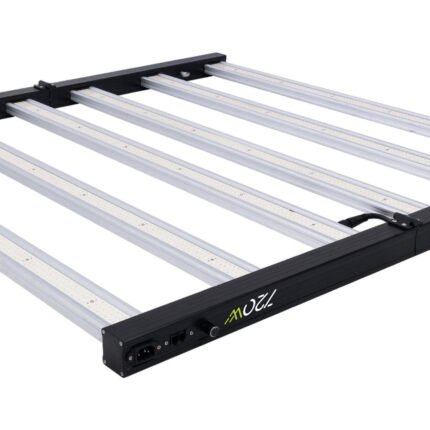
- 720W bar lights: Omega Black 720W Plus, Gorilla 720W Gen III, Linx 720W, Photon 720W 3.2 and Botanixx 720W Direct Drive. Strong, dimmable value for 1.2m to 1.5m tents.
- High efficacy fixtures: the SunKing Elite 630W 6 bar rated at 2.7 µmol/J and the Super Lumen 720W.
Growing seedlings or cuttings? See our propagation grow lights. To light the lower canopy of tall plants, add under canopy lighting.
LED Grow Light Size Guide
Match the light to your tent footprint using its true wall-draw wattage, not a marketed "equivalent" figure. Size for the flowering stage, as it needs the most light, and dim the fixture during propagation and veg.
| Tent size | Size in feet | Propagation and veg | Flowering | Example fixtures |
|---|---|---|---|---|
| 60 x 60cm | 2 x 2ft | 50 to 100W | 100 to 150W | SanLight EVO 60 x 60cm set |
| 80 x 80cm to 1m x 1m | 3 x 3ft | 100 to 150W | 200 to 300W | Lumatek ATTIS 300W, Omega Infinity 300W, SanLight EVO 80 x 80cm set |
| 1.2m x 1.2m | 4 x 4ft | 150 to 250W | 300 to 480W | Lumatek Zeus 465W, SanLight EVO 120 x 120cm set, a dimmed 720W bar light |
| 1.5m x 1.5m | 5 x 5ft | 250 to 350W | 450 to 650W | SunKing Elite 630W, Lumatek Zeus 600W, 720W bar lights |
| 1.2m x 2.4m and larger | 4 x 8ft and up | Two fixtures, dimmed | Two 300 to 480W fixtures or one 1000W | Lumatek Zeus 1000W, SanLight bundles |
Not sure which tent fits your space? Read our guide on how to choose the right grow tent size.
Understanding LED Specs: PAR, PPF, PPFD and µmol/J
- PAR (Photosynthetically Active Radiation) is the 400 to 700nm range of light that plants use for photosynthesis.
- PPF (Photosynthetic Photon Flux) is the total PAR a fixture produces each second, measured in µmol/s.
- PPFD (Photosynthetic Photon Flux Density) is how much of that light lands on each square metre of canopy, in µmol/m²/s. It is the most useful number when comparing lights for your tent.
- Efficacy (µmol/J) shows how much usable light a fixture makes per watt. Quality LEDs today typically sit around 2.5 to 2.9 µmol/J, so a lower-wattage light with higher efficacy can outperform a "bigger" one and cost less to run.
As a guide, aim for a PPFD of roughly 100 to 300 for seedlings and cuttings, 400 to 600 in veg and 600 to 900 in flower. With added CO2, many growers push flowering above 1,000.
Full Spectrum, UV and Far Red
Full spectrum LEDs use white diodes with added red to cover every growth stage from one fixture, which is why they suit most home growers. Some growers add UV or far red supplemental bars, such as the Lumatek 30W UV bar, to target specific responses like flowering speed and resin production. Supplemental bars work alongside a main light, not instead of one.
How High Should an LED Grow Light Be?
- Seedlings and cuttings: 60 to 75cm above the plants, or closer with the dimmer set to 25 to 50%.
- Vegetative growth: 45 to 60cm above the canopy.
- Flowering: 30 to 45cm above the canopy for most full power fixtures.
Always check the manufacturer's PPFD map for your fixture. If the top leaves bleach or curl upwards, raise or dim the light.
LED vs HPS vs CDM Grow Lights
| LED | HPS | CDM | |
|---|---|---|---|
| Running cost | Lowest | Highest | Medium |
| Heat at the canopy | Low | High | Medium |
| Spectrum | Full spectrum, often dimmable | Red and orange, strong for flowering | Full spectrum with some UV |
| Lifespan | 50,000+ hours | Lamp replaced every 9 to 12 months | Lamp replaced around once a year |
| Upfront cost | Highest | Lowest | Medium |
As a rough guide, a 600W HPS is matched by around 400 to 480W of quality LED. HPS still makes sense for low upfront cost, and its extra heat can help in a cold loft or garage in winter.
Dimmers and Lighting Controllers
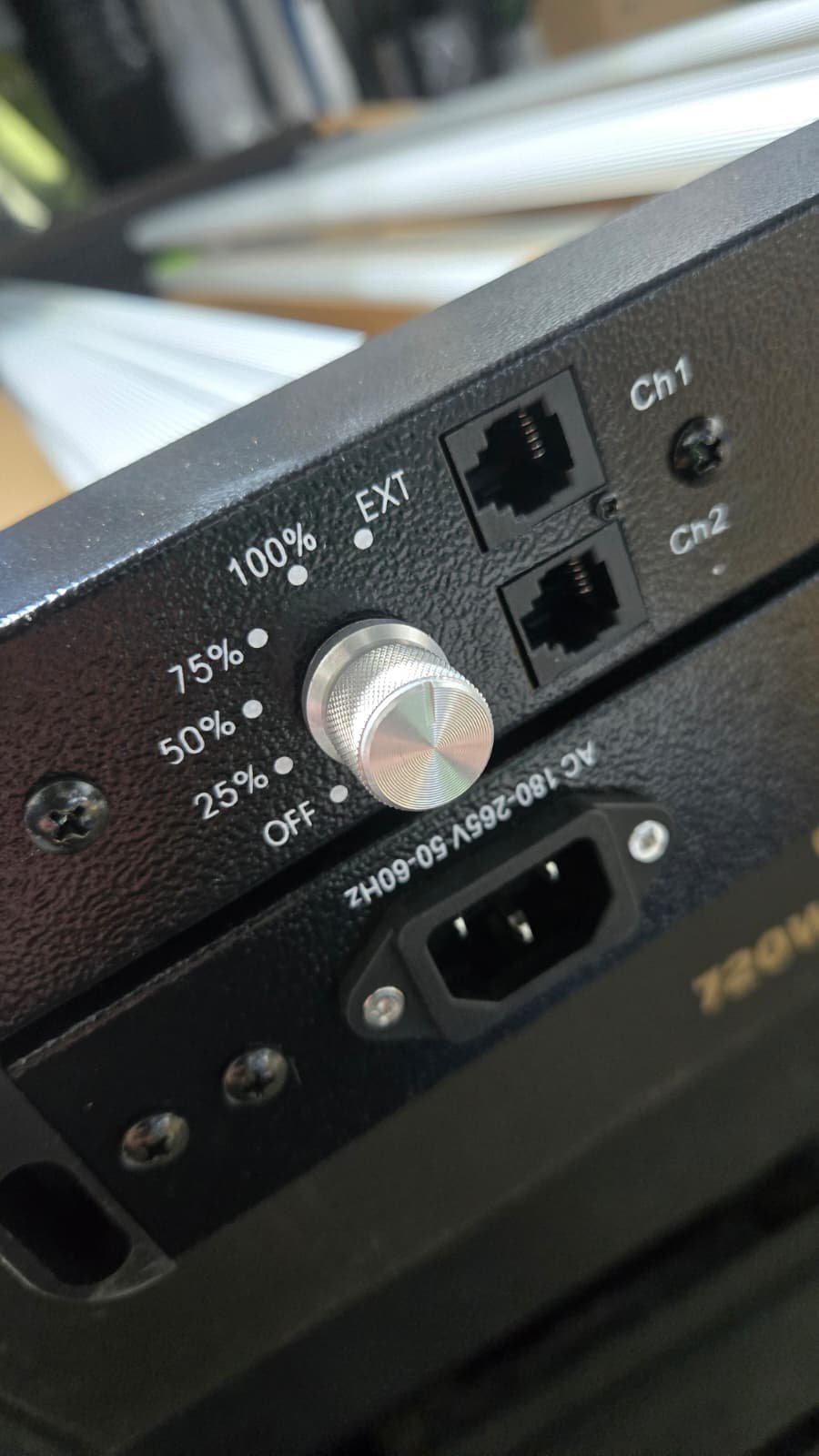
Most modern LED grow lights are dimmable, so one fixture can run gently for seedlings and at full power in flower. We stock SanLight magnetic and Bluetooth dimmers, plus TrolMaster lighting control adapters and RJ12 or RJ45 connectors for 0 to 10V control of several lights from one controller.
Complete Your LED Grow Room
LEDs run cooler than HPS, but your tent still needs fresh air and climate control:
- A grow tent sized to your light, from BudBox or GorillaBox
- Grow room extraction kits and carbon filters
- Fan speed controllers and circulation fans
- Humidity control, and grow room heating for cold winter grows
Why Buy LED Grow Lights from Hydro Land?
- A Manchester-based hydroponics shop supplying genuine SanLight, Lumatek, Secret Jardin and SunKing Elite stock
- Lights listed with true wattage and efficacy, not inflated "equivalent" figures
- Free advice on matching wattage, PPFD and spectrum to your tent
- Fast, discreet dispatch from the UK
LED Grow Light FAQs
What size LED grow light do I need for a 1.2m x 1.2m tent?
A 1.2m x 1.2m (4 x 4ft) tent needs an LED with a true wall-draw of around 300 to 480W for flowering. Dim it to 150 to 250W for propagation and veg.
What LED is equivalent to a 600W HPS?
A quality LED drawing around 400 to 480W matches a 600W HPS for coverage and yield, while using less power and producing less heat.
How far should an LED grow light be from plants?
Start at 60 to 75cm for seedlings, 45 to 60cm in veg and 30 to 45cm in flower, then follow the manufacturer PPFD map. Raise or dim the light if the top leaves bleach.
What PPFD do plants need?
Roughly 100 to 300 µmol/m²/s for seedlings and cuttings, 400 to 600 in veg and 600 to 900 in flower. With added CO2, flowering plants can use 1,000 or more.
What does µmol/J mean on an LED grow light?
It is the efficacy rating: how many micromoles of usable light the fixture makes per joule of electricity. Higher is better, and quality LEDs typically reach 2.5 to 2.9 µmol/J.
Can one LED light cover propagation, veg and flower?
Yes. A dimmable full spectrum LED can run at low power for seedlings and full power in flower, so one fixture covers the whole grow.
Do LED grow lights get hot?
They produce far less heat at the canopy than HPS, but the fixture and driver still warm the tent, so you still need extraction and a fan speed controller.
How long do LED grow lights last?
Quality LED grow lights typically last 50,000 hours or more with little drop in output, compared with an HPS lamp that needs replacing every 9 to 12 months.
Are LED grow lights cheaper to run than HPS?
Yes. LEDs use less electricity for the same light at the canopy and need no replacement bulbs, so running costs are lower over the life of the fixture.
Can I use LED grow lights for seedlings and houseplants?
Yes. Low-wattage LED bars such as Secret Jardin Cosmorrow, or our propagation grow lights, are ideal for seedlings, herbs and houseplants.