


Introduction
Grow tent size depends on three factors: plant count, light wattage, and available room dimensions. A tent sized correctly for plant count but paired with insufficient lighting produces poor yield regardless of floor space. This guide sets a sizing chart by plant count, matches light wattage to tent footprint, and explains height and space requirements by grow stage.
Grow Tent Sizing Chart by Plant Count
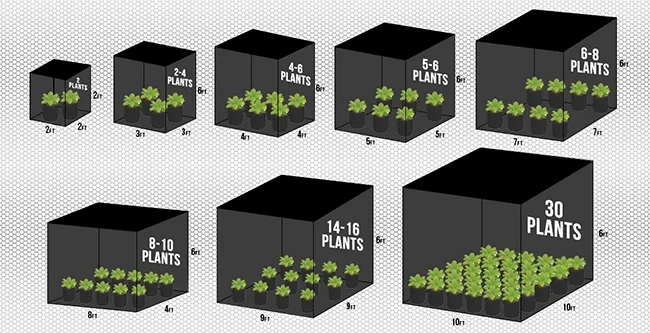
Six standard tent sizes cover most home grow setups. A 2×2 ft tent (4 sq ft) fits 1 to 2 plants, suited for a single large plant or a propagation space. A 2×4 ft tent (8 sq ft) fits 2 to 4 plants. A 3×3 ft tent (9 sq ft) fits 2 to 4 plants with more working room than a 2×4. A 4×4 ft tent (16 sq ft) fits 4 to 6 plants and ranks as the most common hobbyist size. A 5×5 ft tent (25 sq ft) fits 6 to 9 plants under a single large-panel fixture. A 4×8 ft tent (32 sq ft) fits 6 to 12 plants under a two-fixture lighting configuration.
Container size changes plant count within each tent size. A 4×4 tent holds 4 plants in 5-gallon pots comfortably, giving each plant roughly 4 square feet of canopy space, sufficient for most training methods.
How Grow Light Wattage Determines Tent Size
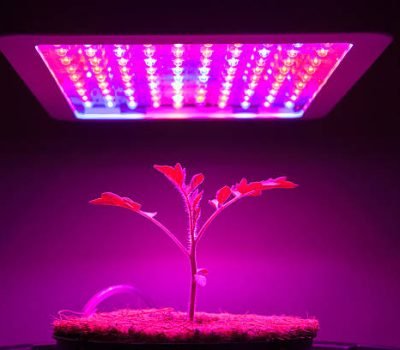
Light wattage requirements scale with tent square footage, not tent dimensions alone. Vegetative growth needs 20 to 30 watts per square foot of canopy. Flowering growth needs 30 to 50 watts per square foot of canopy. A 4×4 tent at 16 square feet needs 480 to 640 watts of LED power during flowering, typically delivered through one primary fixture or two smaller fixtures combined.
An oversized tent paired with underpowered lighting produces uneven canopy coverage and reduced yield at the tent’s edges. Light should match actual canopy area rather than full tent footprint during early growth stages, since young plants rarely fill the entire tent. Growers who know their canopy will expand to fill the tent by the third week of flowering should size lighting for that mature footprint from the start, avoiding a mid-grow lighting upgrade.
How Much Height Do You Need?
Standard grow tents range from 6.5 to 7 feet in height, sufficient for most soil-based grows using standard training methods. Tents with 8 feet of height suit tall plant varieties or setups requiring overhead equipment clearance for ducting and light hanging distance. Height requirements increase for training methods like Screen of Green (SCROG) or Sea of Green (SOG), since these methods add horizontal netting or increased plant density that requires additional vertical clearance for light positioning.
Equipment height reduces usable growing height inside any tent. Pot height, light hanging clearance, and ducting connections at the tent’s top each subtract from the vertical space available to the plant canopy. A tent’s stated height reflects total interior space, not remaining canopy clearance after equipment installation.
Measuring Your Available Space
Four steps confirm whether a tent size fits an intended space. Measure the room’s full length, width, and ceiling height first. Subtract 12 to 18 inches from each wall dimension to allow clearance for ventilation equipment and tent access. Confirm ceiling height accommodates the tent’s full height plus additional clearance for ducting and light fixtures above the tent. Check doorway width and height to confirm the tent’s frame and canvas can pass through during setup, since tent boxes and assembled frames sometimes exceed standard doorway dimensions.
Tent Size by Grow Stage
Seedling and vegetative stage plants need less space than mature flowering plants, since canopy width increases substantially between stages. Some growers use two separate tents, a smaller vegetative tent and a larger flowering tent, to match tent size to plant size at each stage rather than running a single oversized tent throughout the full grow cycle. This two-tent approach reduces total energy cost during early growth stages, when full-size lighting and climate control would otherwise run at partial capacity.
Common Sizing Mistakes to Avoid
Three mistakes affect grow tent sizing outcomes. Oversizing a tent without matching lighting and ventilation capacity leaves canopy edges under-lit and airflow uneven across the full footprint. Undersizing a tent restricts canopy growth and airflow, increasing humidity and heat buildup around densely packed plants. Ignoring doorway and access dimensions during planning creates an assembly problem after the tent arrives, when the frame or canvas cannot pass through the entry point.
Frequently Asked Questions
What size grow tent do I need for 4 plants?
A 4×4 ft tent fits 4 to 6 plants and provides roughly 4 square feet of canopy space per plant in standard containers.
Can a grow tent be too big?
Yes, an oversized tent without matching light and ventilation capacity produces uneven canopy coverage and reduced yield.
What’s the best grow tent size for beginners?
A 2×2 ft or 3×3 ft tent suits beginners managing 1 to 4 plants with lower equipment cost and simpler climate control.
How tall should a grow tent be?
Standard tents range from 6.5 to 7 feet, with 8-foot tents suited for tall plants or overhead equipment clearance needs.
Do I need a bigger tent for hydroponics?
Hydroponic systems need additional floor space for reservoirs and pumps, often requiring one size larger than an equivalent soil-based setup.
Conclusion
Grow tent size depends on plant count, light wattage per square foot, and measured room dimensions rather than room size alone. The 4×4 ft tent fits 4 to 6 plants under 480 to 640 watts of LED power, ranking as the most common hobbyist configuration. Height requirements shift with training method and equipment clearance, while doorway dimensions determine whether a chosen tent size fits the intended room at all. Matching tent size to plant count and light capacity together, rather than either factor alone, produces the most consistent canopy coverage and yield.